NPO? NGO? NPC? PBO? What’s the Difference Anyway?
“A rich man without charity is a rogue; and perhaps it would be no difficult matter to prove that he is also a fool." (Henry Fielding, English writer and judge)
Across the country, tens of thousands of groups run feeding schemes, environmental projects, schools, clinics, and training centres, often built on passion rather than profit.
But while “NGO” is the word most people use, it’s not actually a legal term in South Africa. Entrepreneurs who fund or collaborate with non-profits need to know what each term really means, because it affects compliance, governance, and whether your donation qualifies for a tax deduction.
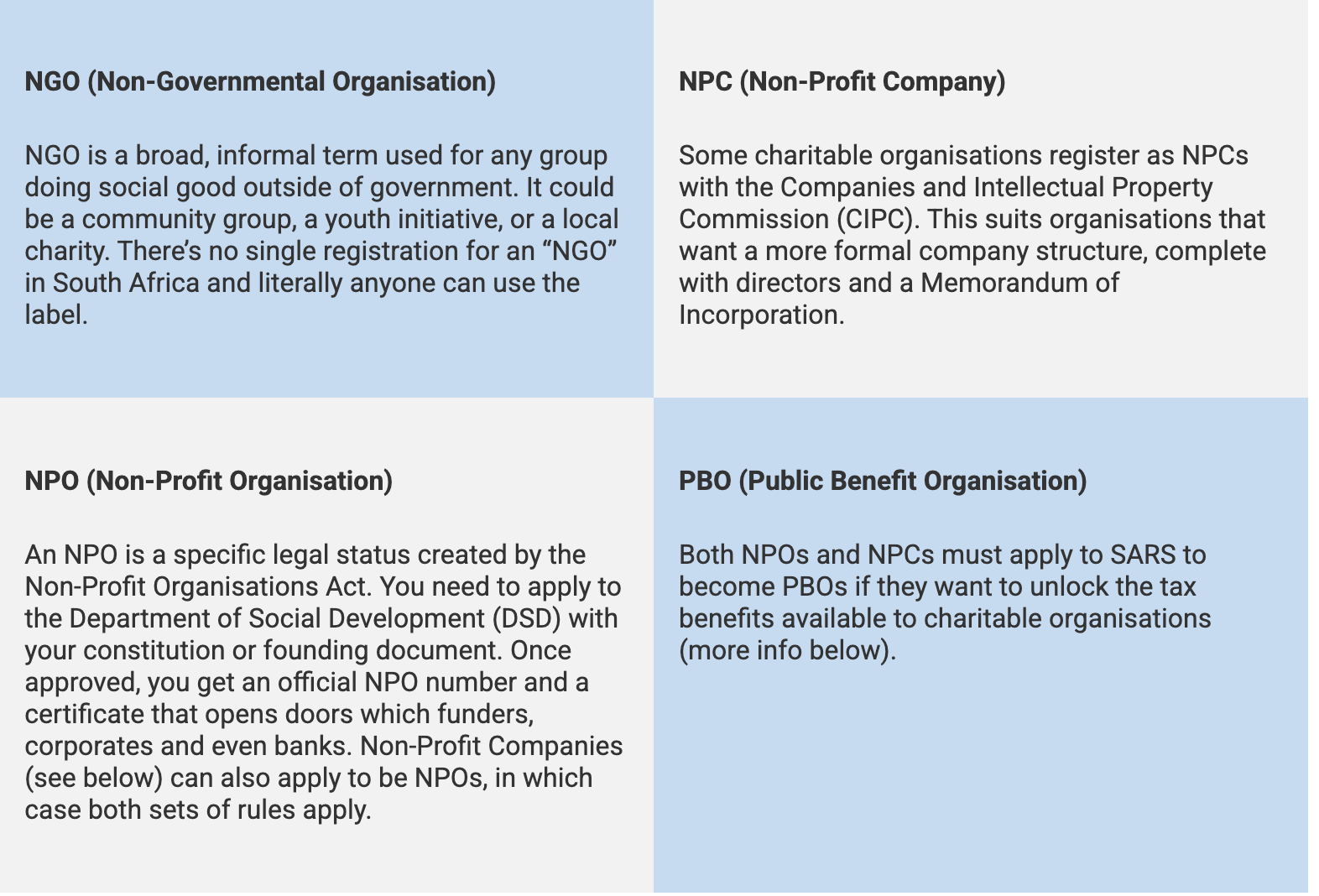
Alphabet soup: What does it all mean?
What’s the point of registering?
Many groups, particularly small ones, will run perfectly well without registering. Registering does, however, bring a number of real advantages.
- It shows funders and partners that the organisation is credible and accountable.
- It lets the operators open a business bank account in the organisation’s name.
- It qualifies the organisation for funding from government, corporates, and the National Lotteries Commission.
- It’s the first step toward tax exemption.
Any entrepreneurs working with or donating to a cause should always ask for proof of registration as an NPO or NPC.
When does “non-profit” mean tax-free?
Here’s where many people get caught out. Just because an organisation is registered as an NPO doesn’t mean they are automatically exempt from tax. To enjoy tax benefits, like exemption from income tax and giving donors section 18A certificates, the organisation must also apply to SARS for Public Benefit Organisation (PBO) status. (Being granted Section 18A status requires a separate approval on top of PBO status.)
That approval comes with conditions: funds must only be used for approved public-benefit activities, and annual returns must be filed. PBO status will always make an organisation more attractive to donors because their contributions can now become tax-deductible and exempt from donations tax.
How do finances and reporting work?
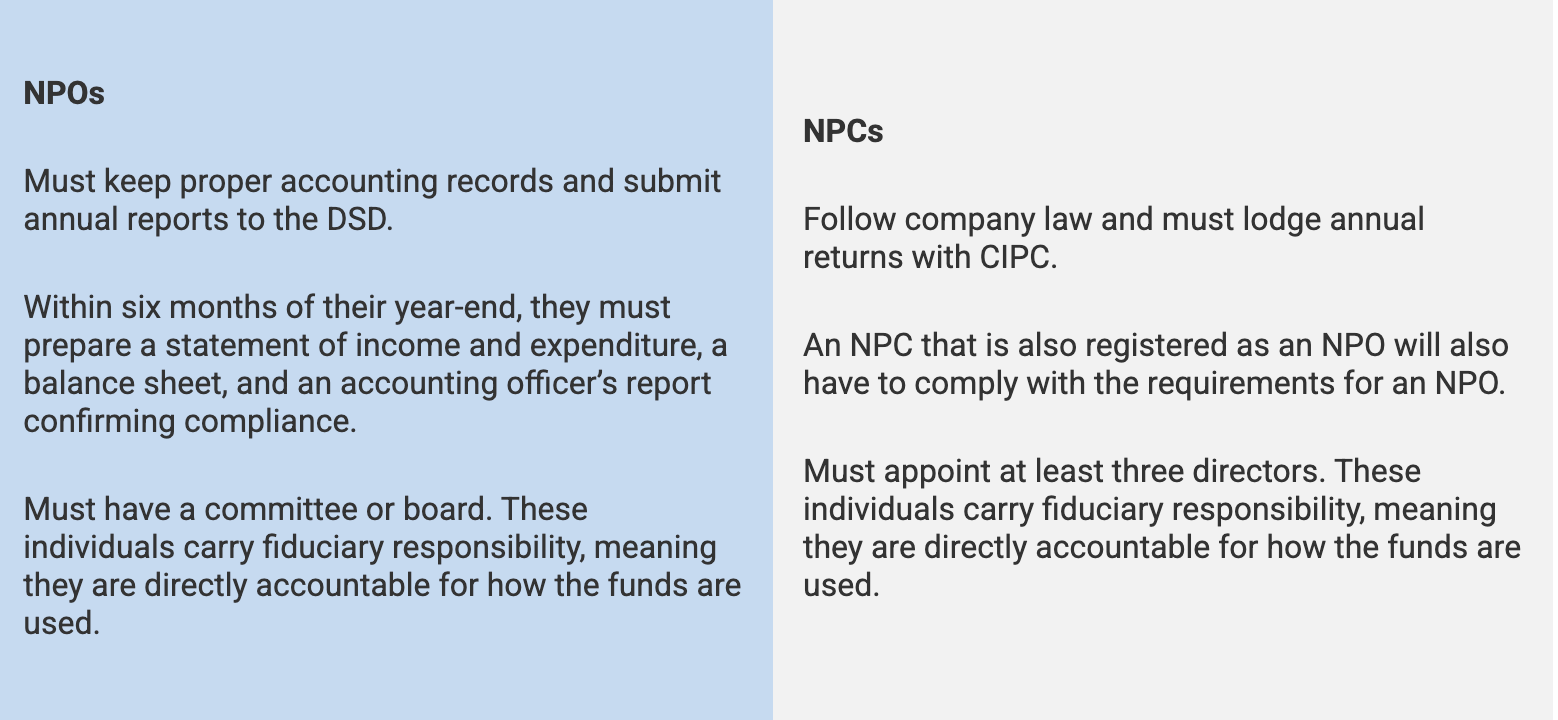
While this might sound like a lot of admin, it protects both sides. Donors get transparency, and the organisation builds a track record for future funding.
Three key questions
Anyone partnering with a non-profit should always review its governance set-up before committing resources and be able to answer the following questions:
- Is it registered with DSD or CIPC or both?
- Does it have PBO approval from SARS?
- Are its financials current and submitted?
If the answer is “yes” to all three, then you are working with an organisation that’s not just doing good – it’s doing good in the right way.
As your accountants, we can ensure that you’re taking advantage of all the tax benefits available to you.